riscFX
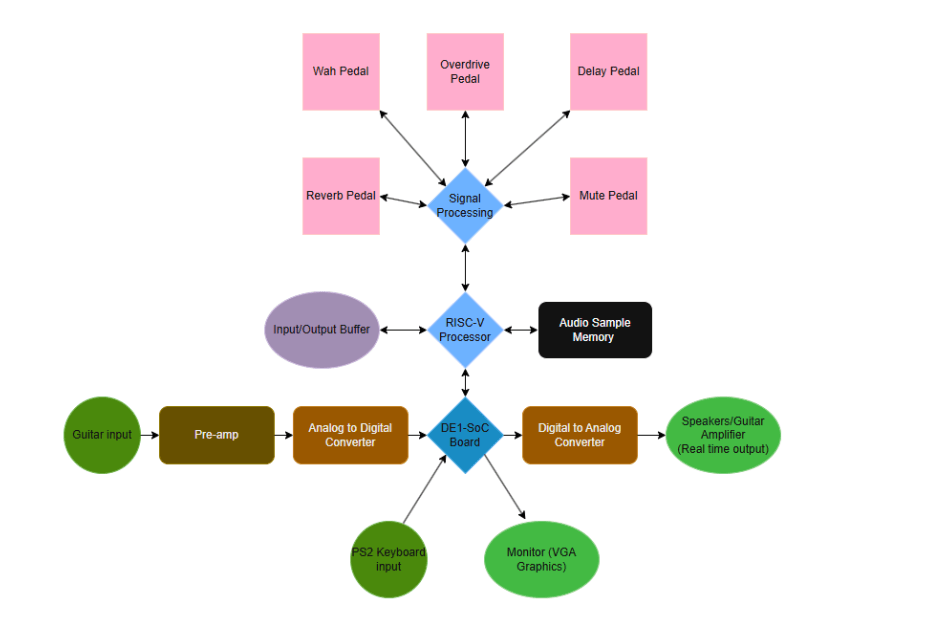
a real-time guitar effects processor built on the DE1-SoC board. it takes a pre-amplified, line-level signal from an electric guitar and applies real-time digital signal processing to modify the sound.
the signal chain runs the guitar into a pre-amp, then into an analog to digital converter that feeds the DE1-SoC. from there a RISC-V processor manages the audio, moving samples through an input/output buffer and audio sample memory and dispatching them to the signal processing stage.
the signal processing stage implements five effects: reverb, delay, wah, overdrive, and mute. these run across the FPGA fabric and the ARM processor on the DE1-SoC. effects are toggled in real time using the on-board switches, with a PS/2 keyboard and VGA monitor handling control and effect state display.
the processed samples are converted back to analog through a digital to analog converter and sent to a speaker or guitar amplifier, so the effect is heard the instant you play. the DSP runs at a 44.1 kHz sample rate with under 5 ms of latency, and FIFO buffering combined with DSP filtering keeps signal noise down by over 90 percent.